IML Ei5 Emotional Intelligence 360 Assessment
Understand the link between emotional intelligence, leadership and performance
The IML Ei5 Emotional Intelligence Diagnostic Survey is a practical development tool designed to help individuals better understand how they recognise, manage and respond to emotions — in themselves and in others.
Emotional intelligence is a critical capability for leaders, managers and professionals who need to build trust, communicate effectively, navigate pressure, influence others and create positive workplace cultures.

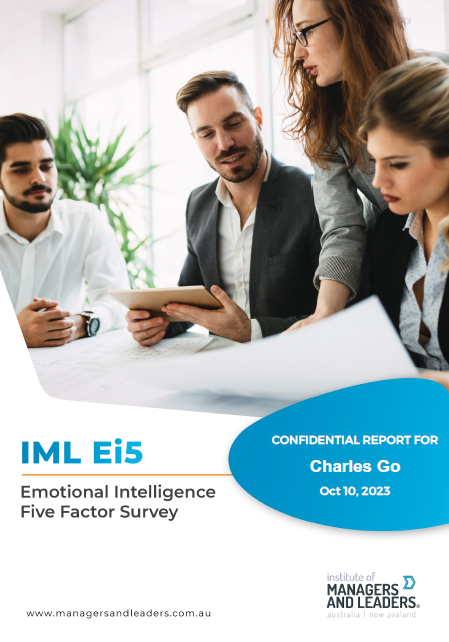
The five success factors
Self-Awareness - Understanding your emotions, triggers, strengths and behavioural patterns, and recognising how these impact the way you lead, communicate and make decisions.
Self-Regulation - Managing emotional responses, staying composed under pressure, adapting to change and responding thoughtfully rather than reacting impulsively.
Empathy - Recognising and understanding the emotions, perspectives and needs of others, and using that awareness to build stronger working relationships.
Intrinsic Motivation - Being driven by purpose, personal standards and a commitment to growth, even when faced with setbacks, challenges or competing priorities.
Social Skills - Communicating with confidence, building rapport, managing conflict, influencing others and contributing to a more collaborative and productive workplace.
Turning insight into action
The Ei5 report turns survey results into clear, practical insights that help individuals, teams and leaders better understand emotional intelligence, improve self-awareness, strengthen relationships and support meaningful development. The report provides actionable guidance across the five key areas, helping participants identify strengths, recognise development opportunities and translate insight into positive behavioural change.
Ei5 comprehensive report
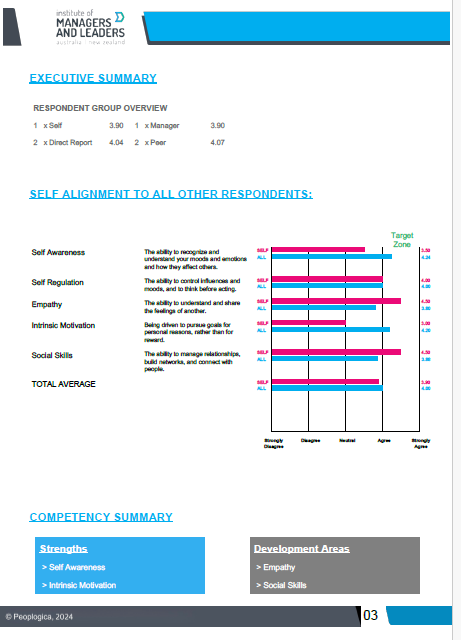
The Ei5 report begins with a top-line summary of strengths and development areas across the five core dimensions giving participants a quick snapshot of their overall emotional intelligence profile.
From there, you move into greater detail, comparing self-perception with feedback from others and highlighting where views are aligned or where potential blind spots may exist. Each of the five EI areas is then broken down into individual survey questions, helping participants understand the specific behaviours that sit behind their results.
This flow makes the report easy to interpret and highly actionable, supporting meaningful reflection, coaching conversations and focused development planning.
Bonus report - recommended actions
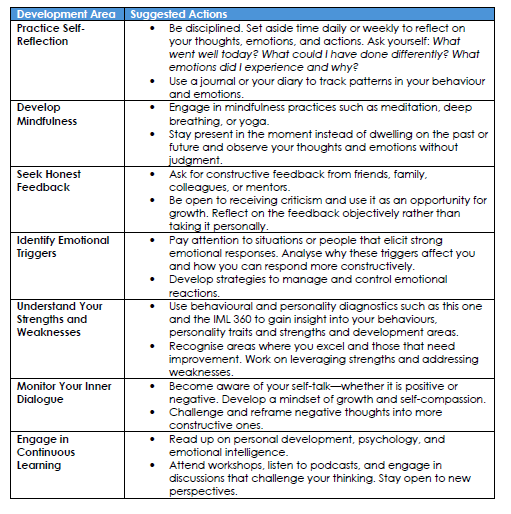
Accompanying the report, the Ei5 Development Supplement has been designed to help participants move beyond insight and into practical action. While the Ei5 survey report identifies strengths, development areas and potential blind spots across the five key areas of emotional intelligence, the supplement provides targeted strategies to help build capability where it matters most.
Based on the feedback received through the survey, participants can explore a range of suggested actions, reflection prompts and practical development steps aligned to each of the 5 areas. These recommendations help individuals focus on specific behaviours they can strengthen, adjust or apply more consistently in the workplace.
The supplement can be used as a self-guided development tool, as part of a coaching conversation, or to support a broader leadership development plan. It encourages participants to translate feedback into meaningful behavioural change — identifying what to keep doing, what to stop doing and what to start doing to build greater emotional intelligence and improve their impact with others.
Feedback and emotional intelligence
Emotional intelligence is built through self-awareness, and feedback helps make that awareness more accurate. It shows how our behaviour, communication and emotional responses are experienced by others, revealing strengths, blind spots and gaps between intention and impact.
By seeking and acting on feedback, individuals can strengthen their emotional intelligence, improve relationships and become more effective leaders, colleagues and team members.