The Management Success Profile
Build stronger managers with clearer insight
The Management Success Profile is a practical diagnostic tool designed to help organisations understand the strengths, gaps, and development needs of their managers.
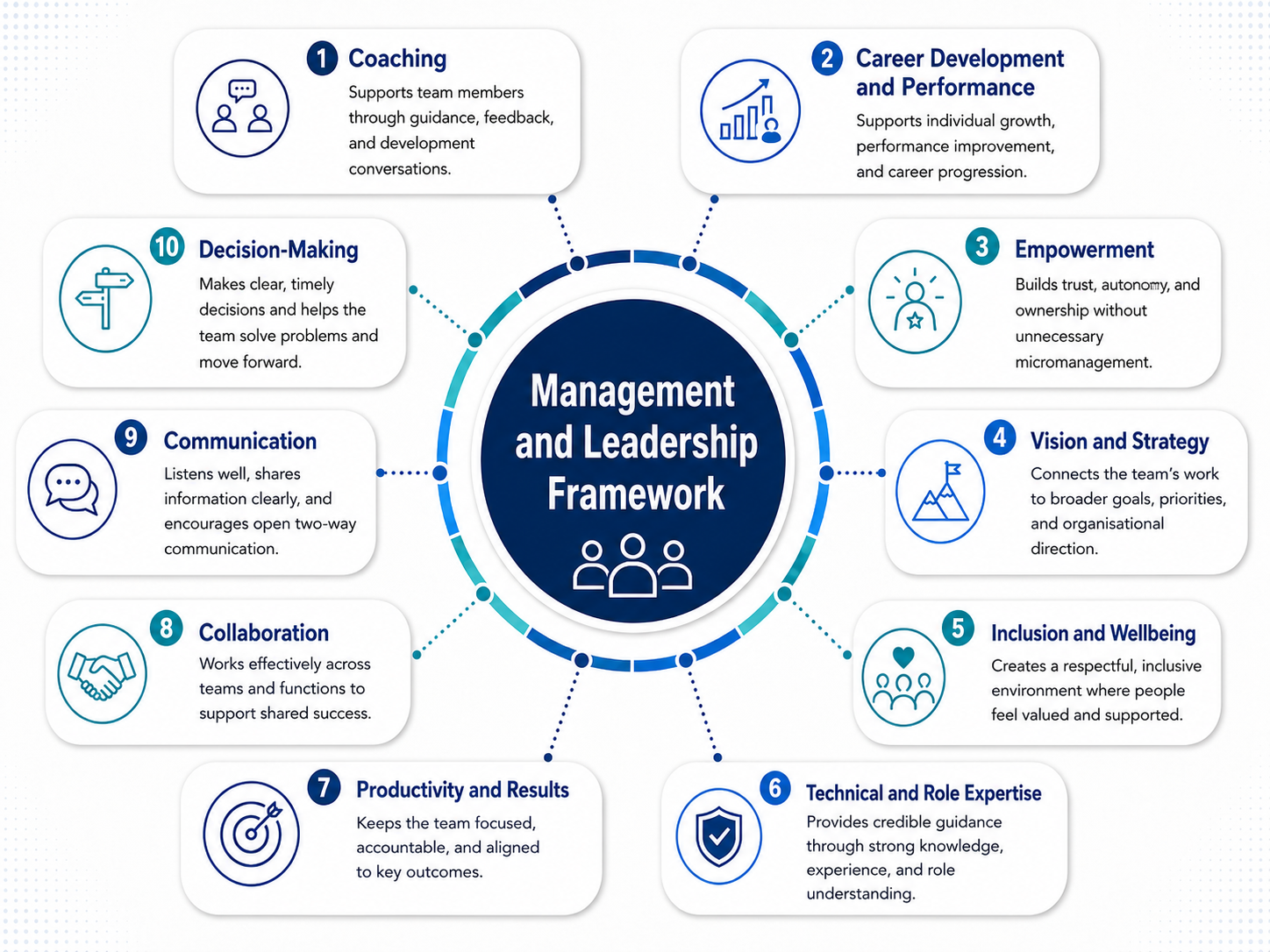
Built around 10 critical management behaviours , the profile gives leaders a clear view of how managers are showing up for their teams, where they are having the greatest impact, and where targeted support could make them even more effective. These behaviours are aligned to management success and include coaching, empowerment, communication, inclusion, career development, strategic clarity, collaboration, and decision-making.
A clearer picture of management capability
Managers play a critical role in shaping employee engagement, performance, wellbeing, and team culture. The Management Competency Profile helps organisations move beyond assumptions and gain structured feedback on the behaviours that matter most.


Manager success factors
Coaching
Supports team members through regular guidance, feedback, and development conversations.
Empowerment
Gives people trust, autonomy, and ownership without unnecessary micromanagement.
Inclusion and Well being
Creates a respectful, inclusive environment where people feel valued and supported.
Productivity and Results
Helps the team stay focused, accountable, and aligned to key outcomes.
Communication
Listens well, shares information clearly, and encourages open two-way communication.
Career Development and Performance
Supports individual growth, performance improvement, and career progression.
Vision and Strategy
Connects the team’s work to broader goals, priorities, and organisational direction.
Technical and Role Expertise
Provides credible guidance through strong knowledge, experience, and role understanding.
Collaboration
Works effectively across teams and functions to support shared success.
Decision-Making
Makes clear, timely decisions and helps the team solve problems and move forward.
Turning insight into action
All our report turns survey results into clear, practical insights that help managers and leaders better understand the competencies that directly lead to effective management. The report provides actionable guidance across the ten key areas, helping participants identify strengths, recognise development opportunities and translate insight into positive behavioural change.
Our standard report
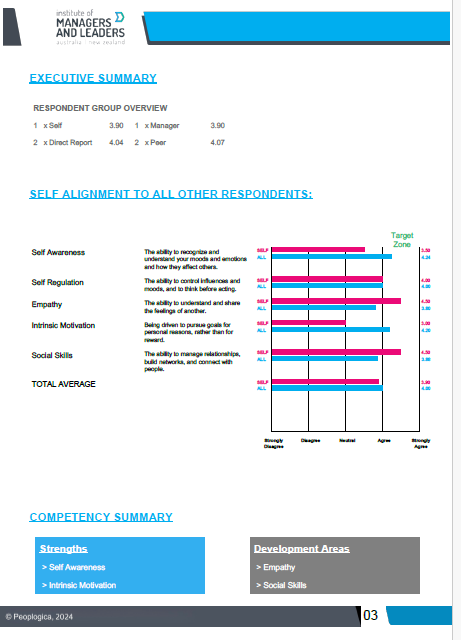
The Management Competency report begins with a top-line summary of strengths and development areas across the ten critical factors, giving participants a quick snapshot of their overall emotional intelligence profile.
From there, you move into greater detail, comparing self-perception with feedback from others and highlighting where views are aligned or where potential blind spots may exist. Each of the five EI areas is then broken down into individual survey questions, helping participants understand the specific behaviours that sit behind their results.
This flow makes the report easy to interpret and highly actionable, supporting meaningful reflection, coaching conversations and focused development planning.
Management matters
Strong, capable managers are critical to organisational success because they translate business goals into action. Through clear communication, sound decision-making, motivation and support, effective managers help people understand expectations, feel valued, solve problems and perform at their best.
The impact is significant. Gallup reports that managers account for 70% of the variance in team engagement and estimates that low engagement costs the global economy US$8.9 trillion, or 9% of global GDP. McKinsey has also found that organisations with strong organisational health, including effective leadership and management practices, can deliver up to three times the shareholder returns of less healthy organisations.
Investing in management capability is therefore not simply about improving morale. It is a strategic business priority that supports productivity, retention, wellbeing, performance and long-term organisational success.